Table of Contents
Why Lo-Fi Content Is Suddenly Beating Your Fancy TikTok Ads
Picture this. Jenna, an e-commerce marketing manager in Austin, spends $12,000 on a polished TikTok ad shoot. Studio, lighting, actors, the whole thing. It looks amazing. Then a creator she randomly sent product to films a rough, handheld review in her bedroom. No mic. No editing. That video crushes Jenna’s studio ad by 4x on CTR and cuts CPA in half.
If that feels familiar, you are not alone. US brands are running into a wall with high-production TikTok ads. Ad fatigue is brutal, creator costs are climbing, and polished content is starting to look like every other “try hard” ad in the feed. Lo-fi, “shot-on-iPhone” content is quietly stealing the show.
In Short:
- Lo-fi TikTok ads feel native, fast, and real, which makes users stop scrolling and actually watch.
- High-production ads often look like TV commercials and get skipped, leading to weak CTR and high CPA.
- US brands are winning by pumping out lots of simple, testable UGC variations instead of a few expensive edits.
- Tools like ViralBox help you scale High-Converting UGC Ads without depending on agencies or endless creator outreach.
UGC TikTok Ads: Fast Dos & Don’ts
✅ Do This
- Open with a clear hook in the first 1 to 3 seconds.
- Use selfie-style angles and natural lighting.
- Talk like a real person, not a scripted announcer.
- Highlight one pain point and one outcome, not 10 features.
- Test 5 to 10 hooks for every winning concept.
🚫 Avoid This
- Perfect lighting, perfect studio, zero personality.
- Logo animations in the first seconds instead of a hook.
- Heavy background music that drowns out the voice.
- Talking about the brand, not the viewer’s problem.
- Launching one expensive ad and “hoping it works”.
📊 What Works Best
- 15 to 30 second videos that feel like a friend’s story.
- POV shots, unboxings, reaction clips, and quick demos.
- Loops and cuts that feel native to TikTok editing styles.
- Retargeting with testimonials, “I was skeptical but…” angles.
- Lo-fi formats powered by Ad Script Generation and rapid testing.
Why Lo-Fi Content Is Crushing Polished Ads On TikTok
1. TikTok Is Built For “Real”, Not “Perfect”
TikTok is not TV, and users do not want TV-style content. They want face-to-camera rants, messy bedrooms, half-finished makeup, screen recordings, and “I just found this thing you need to see” energy.
When your ad looks exactly like the content users already binge, they keep watching. When it looks like a Super Bowl spot squeezed into vertical video, they swipe. That is where most high-production ads die. They visually signal “this is an ad” before the hook can do its job.
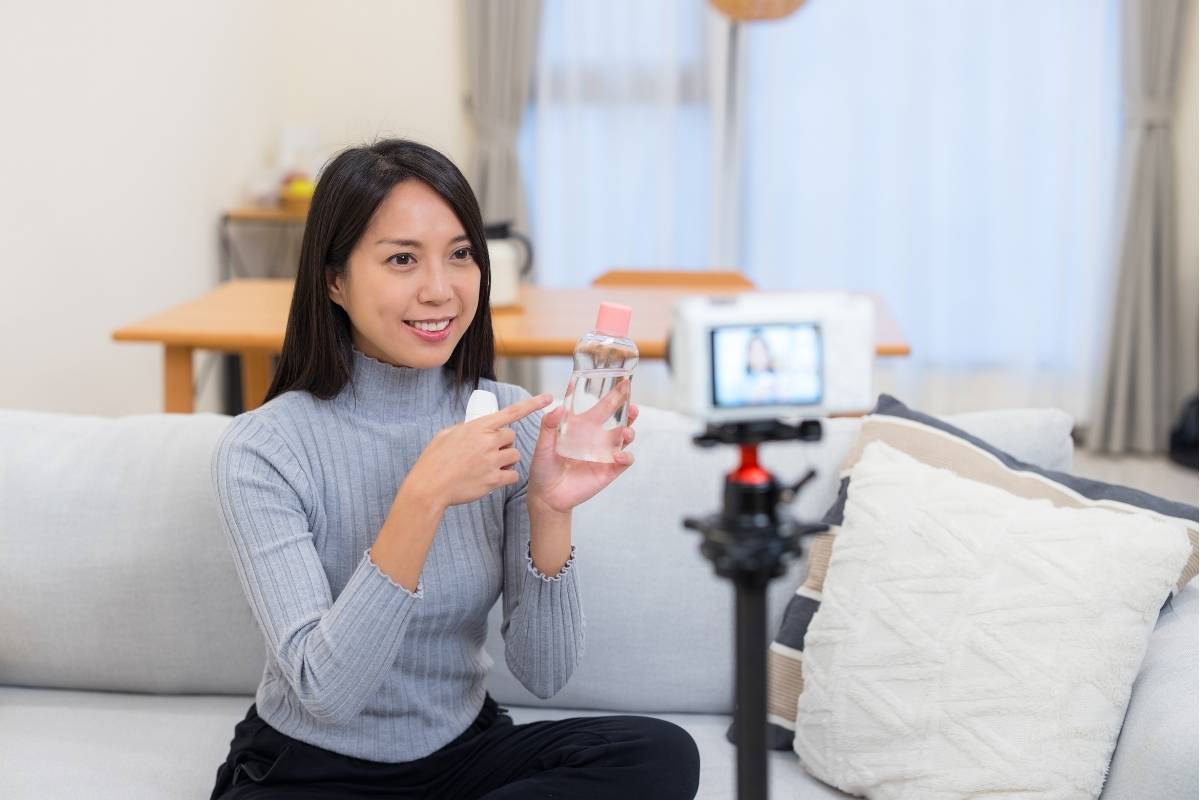
Lo-fi UGC wins because it blends in. A girl sitting in her car talking about your skincare brand feels like any other story on the feed, so the user does not mentally switch to “skip ad mode” as quickly.
2. Authenticity Beats Aesthetics For CTR And CPA
On paper, the studio ad should win. Better lighting, better camera, professional talent. In performance data, the “imperfect” one usually wins because it feels honest. The US audience is tired of over-polished brand-speak. They trust people who sound like them.
Here is what we consistently see with brands that switch to more raw creatives:
- Higher click-through rate because viewers believe the testimonial could be real.
- Lower CPA because the message is clear, simple, and emotionally aligned with a problem they actually have.
- Better retention because the content feels like a story, not a pitch.
Want to know a secret? Most strong UGC ads are just 1 good hook, 1 relatable problem, 1 proof point, and 1 call to action. That is it. The rest is vibe.
3. High-Production Ads Lose The Speed Game
Another big issue is speed. TikTok creative burns out fast. What works for 3 weeks might stall in week 4. If every concept takes weeks to brief, shoot, and edit, you are losing the race before it starts.
Lo-fi content is fast. You can shoot 10 variations in an afternoon with a phone. Or spin up multiple videos using AI Avatar Video Generation for different demographics and hooks without calling a single studio.
That speed gives you two critical advantages:
- You can test more hooks for the same budget.
- You can refresh creatives the moment performance dips, instead of waiting on revisions.
Put bluntly, high-production ads are slow and risky. Lo-fi ads are cheap and testable. On a platform like TikTok, testable always wins.
4. Ad Fatigue Is Real, And TikTok Users Are Brutal
Your US audience is seeing more ads on TikTok than ever. Every scroll is a mix of organic content and promoted posts. When users see the same polished ad format on repeat, their brains learn to skip it instantly.
Lo-fi content slows that reflex down. A new face, a new angle, a slightly messy background, a different hook. It does not look like the last ad they skipped, so they give it a second. That second is all you need to hook them.
This is why brands doing 1 or 2 hero videos are stuck at small budgets, while brands pumping out 20 to 50 simple variations can scale. TikTok rewards volume and novelty, not perfection.
5. The Old Production Model Was Built For TV, Not TikTok
Traditional ad production was designed for big media buys where you would run a single polished spot for months. On TikTok, that model is upside down.
- Instead of 1 perfect video, you need 30 good-enough videos with strong hooks.
- Instead of locking a script months in advance, you tweak angles weekly based on data.
- Instead of “brand guidelines first”, you prioritize scroll-stopping realism first.
That is why many US marketers feel like they are always behind. Their process is optimized for Q4 TV and YouTube pre-roll, not for scrappy, lo-fi, TikTok-native creative.
How To Turn Lo-Fi Into A Performance Engine (With ViralBox)
1. Start With Hooks, Not Pretty Footage
If your opening 3 seconds are weak, nothing else matters. Users decide almost instantly whether they care. You need a system for generating and testing hooks at scale.
This is where tools like ViralBox shine. You can use its A/B Testing Content Hooks feature to spin up dozens of small variations that only change the first line, angle, or opener.
Examples of hooks to test:
- “If you have oily skin, listen to this for 10 seconds.”
- “I wasted $500 on [category] before I found this.”
- “POV: You are tired of [annoying problem] every single day.”
- “I did the math so you do not have to. This saves you $X a month.”
By testing multiple creative intros with the same core message, you quickly learn what your US audience actually responds to instead of guessing for months.
2. Use AI Avatars To Replace Slow, Expensive Shoots
Creator logistics are painful. People are busy, shipping goes wrong, scripts get misunderstood, and half the content comes back off-brief. At scale, that kills your velocity.
With ViralBox, you can generate short-form creatives using Virtual Spokespersons tailored to specific demographics. Different age, tone, and background, all from within the platform. You can keep the lo-fi, “talking to the camera” feel without relying on a new human every time.
Practical ways to use it:
- Test risky hooks with AI first. Once you find winners, brief human creators with proven scripts.
- Localize creatives for different US regions or accents without re-shooting everything.
- Quickly fill creative gaps when a scheduled creator misses a deadline.
3. Let Scripts Do The Heavy Lifting
Most bad TikTok ads are not failing because of camera quality. They fail because the script is boring, brand-centric, or confusing. Good lo-fi content is still structured, it just looks casual.
That is where Authentic UGC Ad Scripts come in. ViralBox lets you generate plug-and-play, TikTok-native scripts built for:
- Problem, agitation, solution flows.
- “I was skeptical but now” testimonial angles.
- Quick product demos that show transformation in under 20 seconds.
- Unboxings and first impressions that look unscripted but hit all key selling points.
The goal is not a “perfect” script. The goal is a simple, clear narrative that any creator or AI avatar can deliver in one take while still sounding human.
4. Connect Your Product Directly To Simple, Native Ads
Want to know what kills performance? Ads that talk abstractly about benefits without ever actually showing the product being used. On TikTok, people want to see it in context, with real hands, real screens, and real situations.
Using ViralBox, you can turn your store and product pages into creatives with a One-Click Product Video workflow. Upload your product photos or connect your catalog, plug into a UGC-style script, and instantly get rough, “this is me using it” type videos.
Good use cases:
- POV screen recordings of your app with a voice walking through the key action.
- Hands-on product demos shot vertically, explaining one core feature.
- Side-by-side “before and after” edits with a simple explanation of what changed.
5. Treat TikTok As A Testing Ground, Not A Final Destination
Your best TikTok creatives will probably be your best Meta and Shorts creatives too. The platform forces you to get tight, fast, and human. Once you find a winning angle there, repurpose it everywhere.
Using ViralBox’s Content Distribution at Scale tools for Multi-Platform Publishing, you can:
- Take your top TikTok UGC ads and resize or slightly tweak them for Reels and Shorts.
- Keep a centralized library of hooks, scripts, and variations that worked.
- Launch cross-platform tests without starting from zero each time.
Instead of reinventing the wheel for every channel, you build once, test hard on TikTok, then syndicate what is proven.
Unlock Your Conversion Potential. Try ViralBox Today!
Your Move: Trade Perfection For Performance
If you are a marketer or founder in the US staring at rising CPAs and dying TikTok ads, you are not broken. Your process is. You are still set up to produce a few immaculate videos, when what the platform rewards is scrappy volume, clear hooks, and content that looks like it came from your customers, not your boardroom.
Lo-fi is not about being lazy. It is about putting your effort where it actually moves numbers: scripts, hooks, and speed. The cameras in our pockets are already good enough. Your edge now is how fast you can test, learn, and scale the angles that actually convert.
If you are tired of guessing with creators, blowing money on sets, and hoping the one big video works, try a different play. Build a simple, repeatable system for raw, testable UGC and let tools like ViralBox handle the heavy lifting in the background.
You do not need prettier ads. You need ads that feel real, ship fast, and hit hard in the first three seconds. The rest is just production value.
Frequently Asked Questions (FAQ)
What is the lo-fi content strategy?
Lo-fi marketing, or low-fidelity marketing, is a strategy focused on simple, raw, and sometimes imperfect content that feels human and unpolished. Instead of renting studios or hiring big crews, brands lean on smartphones, screen recordings, and user-generated content to communicate a clear message quickly. On TikTok, this style fits naturally into the feed, which is why it often outperforms high-production ads.
Why are there suddenly so many ads on TikTok?
TikTok is free to use, so the business model relies heavily on advertising. When you spend time on the app, your behavior and interests are used to show you targeted ads. As more US brands shift budget into TikTok, the ad volume rises, which is why your feed can feel like “all ads” sometimes. This is also why blending in with native, lo-fi content is so important. The more “ad-like” you look, the faster users swipe away.
What is the average ROI for TikTok ads?
ROI on TikTok varies a lot by niche, offer, and creative quality. For paid traffic in the US, brands typically see CPMs in the $8 to $15 range, with click-through rates around 1 to 2 percent. When creatives are strong and tailored to TikTok’s style, CTR can climb significantly higher, which brings down CPA and boosts return on ad spend. That is where a structured approach to hooks, UGC-style content, and rapid testing with platforms like ViralBox can make a noticeable impact on your numbers.