Table of Contents
Why Every Author Needs an AI Video Strategy to Sell Books
Picture this. An e-commerce manager at a mid-sized publisher spends weeks setting up Facebook and TikTok campaigns for a new thriller release. Gorgeous cover, solid reviews, decent budget. Results? Crickets. Scrolls, skips, almost no one watching past three seconds.
Meanwhile a small indie author posts a scrappy, talking-head style video with a strong hook about “the book that ruined my sleep schedule” and it quietly pulls thousands of clicks to Amazon. No studio, no actors, just smart storytelling and smart distribution.
The difference is not budget. It is video strategy. And if you are serious about selling books in the US market, you need a repeatable, AI-boosted way to create and test short-form video at scale, not a one-off trailer that no one sees.
In Short:
- Readers discover books through short video first, then click to buy. Your author or brand needs daily video, not a single trailer.
- Manual video production is too slow and expensive to keep up with ad fatigue and rising CPMs.
- AI Avatar Video Generation and Authentic UGC Ad Scripts let you test hooks, angles, and audiences fast without hiring actors.
- Tools like ViralBox help you connect your product link to video ads and push winning creatives across platforms at scale.
📊 Quick Visual Guide: What Actually Sells Books On Video
✅ Do This
✅ Open with a bold hook in under 2 seconds, like “This thriller made me miss my flight.”
✅ Use short, vertical clips optimized for TikTok, Reels, and Shorts.
✅ Test multiple versions with different opening lines and thumbnails.
✅ Use AI Avatar Video Generation to produce repeatable “talking reviewer” content.
✅ Connect your product link to video ads so every view has a clear path to purchase.
🚫 Avoid This
🚫 One expensive cinematic trailer that runs once and never gets tested.
🚫 Static quote graphics trying to compete in a vertical video feed.
🚫 Relying only on the author’s face when they are not comfortable on camera.
🚫 Guessing hooks instead of running A/B Testing Content Hooks on multiple angles.
🚫 Posting randomly without any content distribution at scale plan.
📈 Key Numbers To Remember
📉 Most book ads lose 70% of viewers in the first 3 seconds if the hook is weak.
🛡️ Testing 5 to 10 hooks can cut your CPA by 20 to 40 percent.
📚 Short UGC-style videos drive significantly higher CTR than static graphics for book promos.
⚡ AI lets you produce dozens of variations in hours instead of weeks.
Why Authors Without Video Are Struggling To Sell Books
The way US readers discover books has flipped
If you are marketing to US readers, your competition is not only other authors. Your competition is every TikTok, Reels, and Shorts clip that hits their feed before they reach your ad. The fastest growing discovery channel for books is not search. It is short-form video, especially on “BookTok” and IG book communities.
That means your old funnel of “blog post + email + static ad” now underperforms. People want to see and hear someone talk about the book, react to it, or show how it made them feel. They want the energy of real conversation, not just a flat cover image.
Static creative is getting punished by the algorithms
US ad platforms are brutally honest. If people scroll past your creative, CPMs rise, CTR drops, and your CPA climbs fast. Static images of a cover or a quote card rarely hold attention. The algorithms are rewarding watch time, engagement, and completion rate. That is video territory.
When authors and publishers rely on a single trailer or a handful of static creatives, three things happen:
- Low CTR because the opening second is not thumb-stopping.
- High CPA because you never find the hook that actually resonates.
- Scaling issues because your one or two assets fatigue quickly as frequency rises.
Traditional video production is a terrible fit for book marketing
Here is where most marketing teams get stuck. They know they need more video, but the typical production path looks like this:
- Hire a videographer or agency.
- Book the author’s time, set locations, handle scripts, revisions, and reshoots.
- Spend weeks in back and forth for a grand total of two or three finished videos.
By the time those videos are ready, trends have shifted and you still have almost nothing to test. On top of that, many authors are introverts, not polished on camera, or simply unavailable. So campaigns stall or marketers fall back on static assets that do not stand a chance against native video content in the feed.
Ad fatigue hits book launches even harder
Books have a short commercial window. A launch might have a 4 to 8 week period where you have the best shot at hitting charts, lists, or strong ROAS. If you burn that window pushing a handful of assets that fatigue in week one, the campaign flops.
Listen up: the platforms do not care that you spent a month on your trailer. If your thumb-stop rate drops, they throttle you. The only fix is creative volume and variation. That is where AI-driven video comes in for authors.
How AI Video Changes The Book Marketing Game
AI avatars take pressure off the author
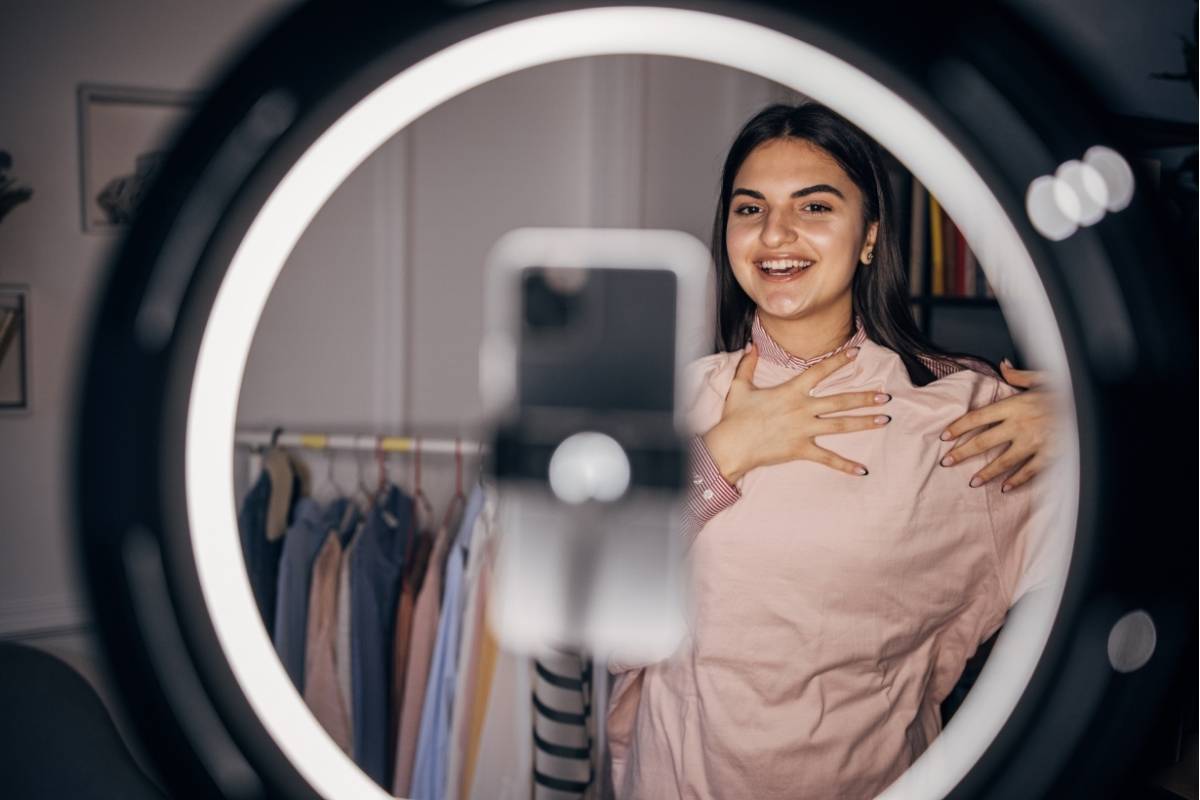
Some authors are natural on camera. Many are not. With AI Avatar Video Generation, you can create virtual spokespersons who look and sound like real people explaining, reacting to, or recommending the book.
That gives you flexibility to:
- Test different “reviewer” personas for different genres (YA reader vibe, business pro, romance superfan).
- Run campaigns even when the author is shy, busy, or mid-tour.
- Align the spokesperson with the ideal reader profile, not just the author’s persona.
You get the feel of influencer-style content without the overhead of casting, contracts, or scheduling.
AI-generated UGC scripts create hooks that actually convert
Want to know a secret? Most book ads fail in the first three seconds because the hook is built for the author’s ego, not the reader’s problem. “A gripping tale of love and loss” might sound pretty to a copywriter. In a TikTok feed, it is dead on arrival.
With Authentic UGC Ad Scripts, you can generate short, punchy, conversational scripts that feel like real people talking about the book, not marketing copy.
Think hooks like:
- “This thriller literally made me cancel plans with my friends.”
- “If you loved The Silent Patient, this twist will wreck you in the best way.”
- “3 reasons this business book saved me six figures in dumb mistakes.”
Those are angles you can quickly test. The AI helps you turn core book benefits and reader pain points into dozens of script variations, which is exactly what you need to unlock winning creatives.
Turning product links into video ads, on repeat
Every book is a product, whether it is on Shopify, Amazon, or your own store. With Product Link to Video Ads, you plug in that product page and pull in the cover, title, reviews, and key bullets directly into your creatives.
From there you can spin up:
- 30-second vertical clips with AI avatars holding the book cover and talking through why it is a must-read.
- Carousel-style formats where each scene highlights a benefit, review, or quote.
- “Unboxing” style sequences where the book is positioned as a gift or seasonal must-buy.
Every video points straight back to the book page, which makes ROAS tracking and scaling a lot cleaner.
Beating ad fatigue with hook testing, not budget increases
Most marketers respond to underperforming book ads by raising budgets or tweaking targeting. That is backwards. If the creative does not hook, the algorithm has nothing to work with. The smarter play is to treat hooks like your primary variable.
With A/B Testing Content Hooks, you can set up multiple versions of the same ad that only differ in those critical first three to five seconds. Same audience, same landing page, same budget. Suddenly you know whether the “Plot twist” angle beats the “Relatable character” angle, or whether social proof outperforms intrigue for your genre.
Once you find a winner, then you scale.
Multi-platform publishing is non-negotiable for authors
Your readers are fragmented. Some discover through TikTok, others through Instagram Reels, others through YouTube Shorts. Posting manually to each platform with slightly different specs, captions, and timing is a grind, especially around launch.
This is where Content Distribution at Scale and Multi-Platform Publishing saves you. You run one creative workflow, then push optimized versions to multiple channels. Same core idea, adapted to the quirks of each platform so your book looks native everywhere, not like a recycled ad.
Building An AI Video System For Selling Books With ViralBox
Step 1: Define one clear outcome per video
Before you generate anything, get specific. Is this ad supposed to drive:
- Cold discovery of a new title.
- Retargeting of people who visited the product page.
- Preorders for an upcoming launch.
- Backlist sales during a promo window.
Each outcome needs its own angle and hook. “Meet your new favorite thriller author” might work for cold discovery, but your retargeting audience needs something closer to “Still thinking about that book you clicked on? Here is what readers are saying.”
Step 2: Generate multiple UGC-style scripts per book
Use Ad Script Generation to create 5 to 10 short UGC scripts focused on different angles:
- Emotion angle (how the book makes the reader feel).
- Social proof angle (reviews, awards, “my book club lost it over this ending”).
- Comparison angle (“If you liked X, you will love Y”).
- Problem / outcome angle (for nonfiction and business titles).
Keep them under 30 seconds, with the best line in the first three seconds. ViralBox helps structure these scripts so they match what already works on TikTok, Reels, and Shorts rather than guessing.
Step 3: Pair scripts with the right virtual spokesperson
This is where Virtual Spokespersons shine. Instead of shooting new video every time, you assign each script to an AI avatar that fits your reader demographic.
Examples:
- YA fantasy title with a teen or college-age avatar and casual speech.
- Business book with a polished professional avatar in more direct, ROI-focused language.
- Romance novel with a warm, relatable avatar talking about “book boyfriend” vibes.
Because the avatars are consistent, you can build “faces” that audiences start recognizing across campaigns and series.
Step 4: Attach your product page and creative assets
Next, plug in your existing book photos, cover art, and any short b-roll you might have. With One-Click Product Video, you can combine:
- AI avatar narration or reaction.
- Close-ups of the book, Kindle version, or audiobook app.
- Review screenshots, bestseller badges, or blurbs.
The output is a native-looking short-form ad where your book feels like part of a normal feed, not a banner ad in disguise.
Step 5: Run structured hook testing, not random posting
Here is where marketers win or lose. Instead of dropping videos randomly and hoping something goes viral, you use Hook Optimization for structured A/B tests:
- Pick one audience and one objective.
- Launch 3 to 5 creatives that only differ in hook and first shot.
- Let them run long enough to get statistically useful data.
- Kill the losers fast, duplicate the winners, then create new variations around that winning idea.
This feedback loop is what lowers your CPA and makes your launches predictable instead of stressful.
Step 6: Distribute at scale once you have winners
Once you find a winning creative, you move it everywhere. With High-Converting UGC Ads built for short-form, you can push them as:
- Paid ads on TikTok, Instagram, Facebook, and YouTube.
- Organic content on the author’s profiles and the publisher’s brand accounts.
- Embedded clips on the book’s landing page or Shopify product page.
Your best-performing angles become the backbone of your whole campaign, not just a single channel experiment.
Unlock Your Conversion Potential. Try ViralBox Today!
Your Next Launch Deserves Better Than Guesswork
Most book campaigns fail quietly. Not because the story is bad, but because almost no one saw a convincing pitch in a format they actually pay attention to. Short-form video is where attention is. AI gives you the speed and volume to show up there consistently.
If you are a marketer, small publisher, or e-commerce brand selling books, you have two paths. Keep fighting rising CPMs with static creatives and one-off trailers, or build an AI-powered video system that generates, tests, and scales UGC-style content every week.
Your authors spent years writing those books. Giving them a serious AI video strategy is not a nice-to-have. It is how you give those stories a real shot at finding readers.
Frequently Asked Questions (FAQ)
Do AI avatar videos feel “fake” to readers?
When done right, they do not. The key is using conversational Authentic UGC Ad Scripts, natural pacing, and angles that match how real readers talk about books. Most viewers simply perceive it as another person in the feed, especially on small mobile screens.
Can AI video really help if my author hates being on camera?
Yes. That is one of the biggest benefits. Virtual Spokespersons let you run campaigns without the author appearing at all. You can still sprinkle in occasional author clips, but the core ad engine does not depend on them.
How many video variations should we test for a book launch?
For a serious launch, aim for at least 5 to 10 hook variations at the start using A/B Testing Content Hooks. You do not need full new concepts every time, just different openings and angles. Once you find a winner, create more variations around it.
Is this only useful for fiction, or does it work for nonfiction too?
It works very well for both. For fiction, focus on emotion, characters, and plot twists. For nonfiction, focus on outcomes, problems solved, and credibility. AI helps you tailor scripts and avatar styles to each category.
Where should we send traffic from these videos?
For US audiences, send traffic to the highest converting page you control. That might be Amazon, your Shopify store, or a dedicated sales page. Using Product Link to Video Ads helps keep that flow consistent and trackable.
How do we avoid creative fatigue over a long series or backlist?
Rotate angles and hooks, not just covers. Use High-Converting UGC Ads to highlight different benefits, reviews, seasons, or reader types. For a series, you can create different creatives tailored to book one discovery, later-book upgrades, and box-set offers.