
Table of Contents
The Invisible Influencer: Making Money on Amazon Anonymously
Picture this. Jenna, an e-commerce manager for a mid-sized beauty brand, is up late scrolling Amazon. She keeps seeing “real person” review videos on product pages that are clearly selling, yet none of these people are big-name influencers. No recognizable faces. No personal brands. Just clean, effective content that moves units. And she thinks, “Why are we still overpaying creators on Instagram when these invisible influencers are quietly printing money on Amazon?”
If that sounds familiar, you are not alone. US brands are squeezed by rising ad costs, creator fees, and content fatigue on every major platform. Meanwhile, anonymous creators and smart brands are using Amazon content, UGC, and AI to drive sales without building a public persona or showing their real face.
In Short:
- You can make money on Amazon without being a public-facing influencer, and brands can tap into this model too.
- Anonymous UGC, voiceover content, and AI avatar videos can fuel Amazon sales and off-Amazon ads at scale.
- Smart marketers use systems for High-Converting UGC Ads and rapid testing instead of relying on a few expensive creators.
- Tools like ViralBox help you generate AI Avatar Video Generation and Authentic UGC Ad Scripts so you can scale content without burning budget.
UGC For Amazon: Quick Dos & Don’ts For Anonymous Creators
✅ DO
- Use clear, close-up product shots that highlight real benefits, not fluff.
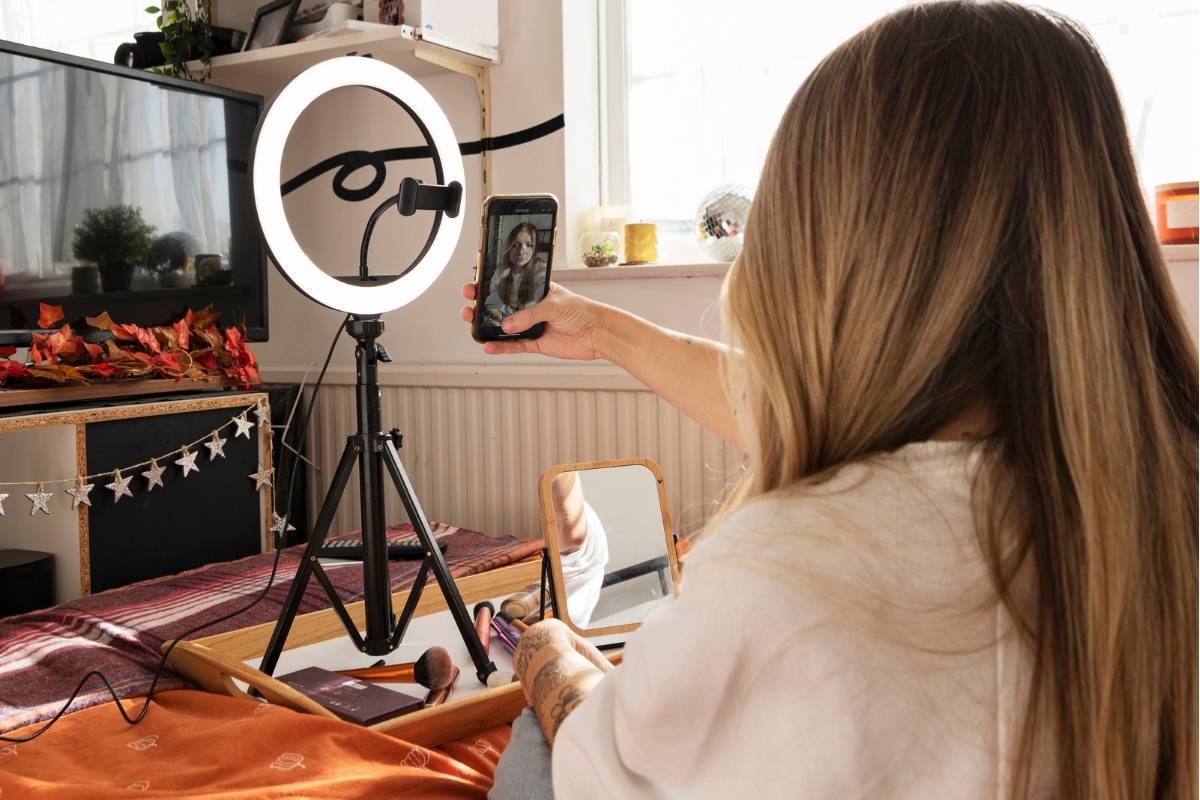
- Record simple voiceovers, even if you never show your face.
- Test multiple hooks in the first 3 seconds to see what stops the scroll.
- Reuse your best Amazon clips in paid ads and short-form content.
🚫 DON’T
- Overproduce your videos. Shaky “real” content often outperforms cinematic edits.
- Show personal data, home addresses, or anything that hurts your anonymity.
- Ignore Amazon’s policies around reviews and disclosures.
- Rely on one single winning video. Ad fatigue hits Amazon too.
🛡️ ANON STRATEGY
- Use hands-only demos, over-the-shoulder shots, or AI avatars.
- Keep your name, face, and personal socials separate from your Amazon work.
- Build a content system that you can duplicate across dozens of products.
Why “Invisible Influencers” Are Quietly Winning On Amazon
The real problem: visibility without vulnerability
Most US marketers still think “influencer” means a charismatic person talking to camera with their face front and center. On Amazon, that model is only part of the story.
Customers on Amazon are closer to purchase than on TikTok or Instagram. They are not there to be entertained for 30 minutes. They are there to decide between three similar products and click “Add to Cart”. The content that matters at that moment is:
- Short, practical, product-focused
- Delivered in a way that feels like a real user, not a staged commercial
- Easy to consume with sound off or low attention
That is exactly where invisible influencers thrive. They create product demos, review-style clips, unboxings, and before/after shots that look like honest customer content, not a scripted TV ad. Many of them never show their face, never build a public brand, and still pull in cash through Amazon commissions or flat fees from brands.
Where brands and agencies are leaking money
If you run an e-commerce brand, you have probably felt at least one of these:
- High CPA on social ads because your creatives burn out in weeks.
- Creator dependency where a few influencers become “the only ones who work” and constantly raise their prices.
- Creative bottlenecks where getting 5 decent videos takes 30 days and a lot of back-and-forth.
- Weak Amazon presence with product pages that are copy-heavy and video-light.
Meanwhile, smaller creators and even solo operators are:
- Publishing short demo videos to Amazon’s product pages.
- Repurposing that same footage into TikTok, Reels, and YouTube Shorts with Amazon affiliate links.
- Using scripted but natural-sounding content that feels like UGC.
They are not celebrities. They are systems people. They know they can be profitable without becoming public figures.
How anonymous creators actually make money on Amazon
Let’s get practical. Here are the main paths that line up with “invisible influencer” style content:
- Amazon affiliate marketing without a face
Create short product clips, comparisons, or “top 5” videos, post them on YouTube, TikTok, Pinterest, or your own site, and drop Amazon affiliate links. You can use only hands, screen recordings, or AI avatars. - Amazon Influencer Program with minimal identity
Amazon expects a social profile to approve you, but that does not mean you need to become a personality account. Many applicants use simple niche pages with product demos, voiceovers, and no personal branding. - UGC-for-hire for Amazon brands
Marketers are happy to pay for product-focused clips they can upload directly to their Amazon listings and run in their off-Amazon campaigns. Your face does not have to be visible if the product is. - Productized content for FBA and private-label sellers
Some creators specialize in repeated formats like “30-second demo + 15-second problem/solution” and sell bundles to multiple Amazon brands each month.
Every one of those models can run anonymously or semi-anonymously. The real asset is not your identity. It is your ability to generate high-converting product content on demand.
The hidden metrics that matter for invisible influencers
If you are a marketer or creator, focus on numbers that brands actually care about:
- Click-through rate (CTR) from your videos and thumbnails.
- View-through rate for the first 3 to 5 seconds.
- Conversion lift on Amazon when your video lives on the product page.
- Cost per piece of content relative to revenue influenced.
This is why systems for A/B Testing Content Hooks and rapid creative iteration are not just “nice to have”. They decide who actually makes money at scale versus who spins in place making one-off videos.
How To Build An “Invisible Influencer” Engine With ViralBox
Step 1: Separate your identity from your output
Whether you are a solo creator or an agency, treat content like a product, not a personality. That means:
- Create neutral brand handles for your Amazon-focused content if you need a social presence for the Influencer Program.
- Use hands-only, over-the-shoulder, product POV, or AI avatars instead of full face-on shots.
- Standardize your lighting, framing, and setups so you can record multiple products in one session.
If you hate being on camera, use AI Avatar Video Generation to create Virtual Spokespersons that talk through your scripts. You get a human-like presenter, but your real identity stays off-screen.
Step 2: Script like a marketer, not like a Hollywood writer
Want to know a secret? The best converting UGC for Amazon is formula-based. It follows simple patterns like:
- Pattern 1: Problem, quick demo, outcome
“I could never keep my pantry organized. This rack snaps in without tools, and now I can see everything at a glance.” - Pattern 2: Before vs after
Show messy situation, show product in use, show clean result. Voiceover fills in why it was worth the purchase. - Pattern 3: Fast FAQ
Answer 3 common questions in 30 seconds: fit, quality, and value.
Instead of writing every line from scratch, let tools do the heavy lifting. Platforms like ViralBox give you Authentic UGC Ad Scripts tailored to your niche and format. You plug in your product benefits and audience, get several high-performing variants, then pick and record.
Step 3: Turn product links into video at scale
For brands and agencies managing dozens of SKUs, the real bottleneck is speed. Your team does not have time to brief a creator for every single product variation.
This is where a system around your catalog pays off. With tools like ViralBox, you can feed in your product media or URLs and generate a Product Link to Video Ads pipeline. The platform pulls your core product details, then builds short-form ad concepts around it so you are never starting from zero.
Suddenly, “we need 20 new angles for Prime Day” becomes a 2-hour task instead of a 2-week fire drill.
Step 4: Treat hooks like a science experiment
Listen up: most anonymous Amazon videos fail in the first 3 seconds. That is when a shopper decides “watch or scroll”. You do not fix that with better cameras. You fix it with better hooks.
Examples of hooks that tend to work well for Amazon-focused content:
- “You are using this wrong, here is how it actually works.”
- “This twenty-dollar thing fixed a problem I have had for five years.”
- “Three things I wish I knew before buying this [product type].”
- “If you have a small bathroom, watch this before you buy storage.”
Instead of guessing, set up structured Hook Optimization. Generate 5 to 10 hooks for the same product, record or render AI avatar versions, then run them as variations. Let data pick the winners, not your gut.
Step 5: Reuse Amazon content everywhere, not just on Amazon
Here is the kicker. The same “invisible influencer” videos that help your Amazon listing convert can double as top-of-funnel and mid-funnel content on TikTok, Instagram, Facebook, and YouTube.
All you have to do is:
- Format for vertical video.
- Trim to 15 to 30 seconds for short-form feeds.
- Add simple captions and on-screen text for sound-off viewers.
- Tag your Amazon or DTC links in the description or overlay.
With a tool that handles Content Distribution at Scale and Multi-Platform Publishing, you stop treating Amazon content as a silo. You treat every clip as an asset that can carry its weight across multiple channels.
Step 6: Build a predictable revenue model around anonymous content
Whether you are a brand or a creator, think in systems:
- For creators: Offer monthly bundles to brands, like “10 anonymous Amazon-ready UGC videos plus cutdowns for social”. Price based on volume and usage rights.
- For brands: Set a monthly target for fresh UGC or AI avatar content per SKU. Use historical data to understand how many creatives you need to keep CPA steady.
- For agencies: Productize “Amazon UGC kits” that include scripts, avatar versions, and live-action options, plus analytics on which variants perform best.
Once your creative pipeline is predictable, you are no longer gambling on one or two influencers. You are operating a content engine that keeps your Amazon presence, and your ad accounts, constantly fed.
Unlock Your Conversion Potential. Try ViralBox Today!
Your Move: Turn Anonymity Into A Revenue Advantage
If you have been waiting to “feel ready” to be on camera, here is the good news. You do not need to be. The invisible influencer model proves that what sells on Amazon is clarity, relevance, and repetition, not your face.
As a marketer or business owner, your job is to build a repeatable content system: tight scripts, strong hooks, product-first visuals, and a way to generate High-Converting UGC Ads without fighting over a few star creators. Tools like ViralBox simply help you move faster so you can test more ideas, at less cost, with less personal exposure.
If you are tired of guessing which video might work and crossing your fingers on launch day, this is your cue. Start acting like an invisible influencer with a very visible impact on your revenue.
Frequently Asked Questions (FAQ)
How can I make money on Amazon without being an influencer?
You have several options. You can sell physical products by creating your own handmade items, starting a dropshipping store on Amazon, or building a private label brand that uses FBA for fulfillment. You can earn commissions through Amazon’s affiliate program by driving traffic from content you publish on YouTube, blogs, or social media. You can also monetize intellectual property by selling custom designs through Merch on Demand or self-publishing books with Kindle Direct Publishing. None of these require you to become a public-facing influencer.
Can I be an Amazon influencer without showing my face?
Yes, you can absolutely operate as an Amazon-focused creator without showing your face. Many people successfully use hands-only product demos, over-the-shoulder shots, screen recordings, or AI avatars with voiceovers. You can still share honest opinions, tutorials, and comparisons while keeping your personal identity private, as long as you follow Amazon’s policies and disclose affiliate relationships where required.
Can I be an Amazon influencer with no followers?
You do not need a massive audience to apply for the Amazon Influencer Program, but you do need a real social media account on Instagram, YouTube, TikTok, or Facebook. Amazon looks for a “meaningful” following, which is less about a specific number and more about engagement and content quality. Many niche accounts with modest follower counts get approved, especially if their content is focused, consistent, and useful to shoppers.