Table of Contents
The Death of the Big Production Ad: Why Lo-Fi AI UGC Wins
Picture this. Jenna, an e-commerce manager in Texas, just wired five figures to a production agency for a glossy product video. Drone shots, studio lights, polished voiceover, the whole deal. Two weeks later the ad goes live, burns through budget, and her CTR is worse than her scrappy iPhone video from last year.
Meanwhile, a creator posts a shaky, 20-second “I just tried this, here’s what happened” clip that looks like it was filmed between errands. That low-fidelity, almost too-casual video quietly crushes her big-budget spot in both click-through and ROAS.
If that sounds familiar, keep reading. This shift is very real in the US ad market. CPMs keep climbing, attention spans keep shrinking, and people are tired of anything that feels like an obvious ad. Which is exactly why lo-fi UGC, boosted by smart AI tools, is beating traditional production.
In Short:
- Polished, studio-style ads often scream “ad” and trigger instant scroll, especially on TikTok, Reels, and Shorts.
- Lo-fi UGC feels native and honest, which leads to higher CTR, better watch time, and lower CAC.
- AI lets you generate High-Converting UGC Ads at scale without hiring endless creators or agencies.
- Brands that test hooks, scripts, and creators quickly win, while those stuck on big productions move too slow to keep up.

UGC Ad Dos and Don’ts (Quick Visual Guide)
✅ Do
- Use raw, handheld shots that feel like a real phone video.
- Open with a bold problem or unexpected hook in the first 2 seconds.
- Show an actual product demo or result, not just branding.
- Use short, punchy Authentic UGC Ad Scripts that sound like how your customers talk.
- Test 5 to 10 hook variations using A/B Testing Content Hooks.
🚫 Don’t
- Rely on perfect studio lighting that looks like a TV commercial.
- Open with your logo, office shots, or generic “brand story”.
- Write stiff scripts that sound like legal approved them line by line.
- Create only one hero video and expect it to work for months.
- Ignore comments, saves, and watch time as creative feedback.
📉 Risks of Big Production Ads
- High upfront cost, usually four or five figures for a single video.
- Slow turnaround that kills your ability to ride trends.
- Look like generic commercials that people have learned to ignore.
- Very hard to iterate when performance drops or ad fatigue hits.
Why Big Production Ads Are Quietly Dying
Your Audience Is Not Watching TV Commercials On Their Phone
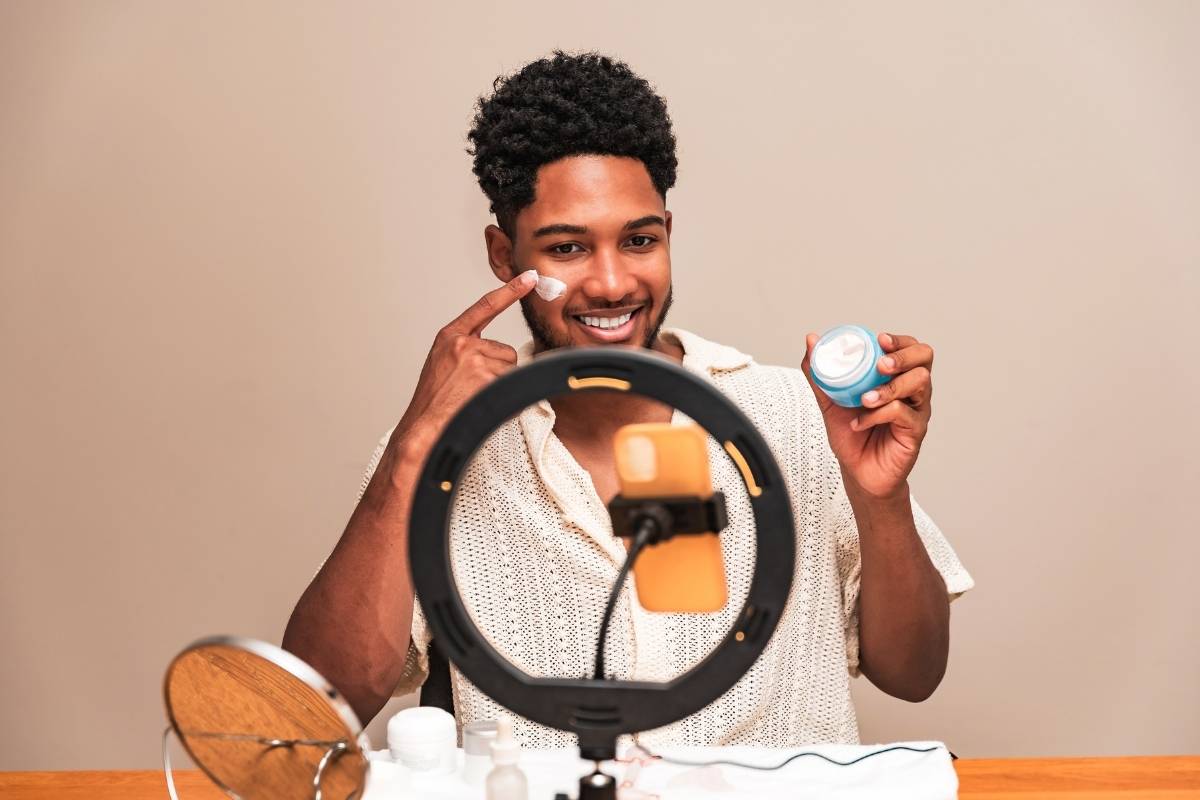
Scroll through TikTok or Reels for five minutes. What stands out? Not the ultra-polished commercial. It is the girl recording in her car, the guy unpacking a package at his kitchen table, the “I did not think this would work but…” stories.
People in the US spend a huge chunk of their screen time on short-form feeds that are built on raw, personal content. When a glossy ad shows up between two selfie videos, it feels fake and out of place. That friction is lethal for performance.
- Big production = pattern interrupt in the wrong direction. It signals “corporate ad” and people swipe away.
- Lo-fi UGC = pattern match. It blends into the feed, feels like a friend sharing something, and earns a few more seconds of attention.
The Economics Just Do Not Work Anymore
Let us talk numbers. A polished brand film or studio shoot can cost thousands before you even spend a dollar on media. If that creative misses, you are stuck with sunk costs and a tired video you cannot easily fix.
On paid social, the cost structure is flipped. Media is the recurring cost. Creative is the lever that either squeezes more out of that spend or burns it.
- If your cost per click is high because the creative feels like an ad, you pay for every scroll past.
- If your creative is native, curious, and clear, CPMs do not feel as painful because more people actually click.
Big production ads were built for a world where you had one TV spot for six months. Today you need dozens, sometimes hundreds, of creative variations just to keep your account from stalling. That is exactly where lo-fi and AI-generated content shine.
Ad Fatigue Hits Big Production First
Here is the kicker, your best-looking ad is usually the first one people get bored with. The more “produced” something looks, the more often the same user remembers seeing it. That speeds up ad fatigue.
Lo-fi UGC, especially when you rotate hooks, creators, and angles, has two big advantages:
- It looks different each time, even if the underlying offer is the same.
- It is cheap and fast enough to replace before performance craters.
A single big ad might give you a spike of performance for a few weeks. A pipeline of lo-fi UGC and AI avatar creatives gives you a constantly refreshed bench of content that can carry your account for months.
Trust Beats Polish Every Time
Your buyers have watched enough ads to spot a script from a mile away. They look for tiny signals of authenticity. Shaky camera. Real kitchen. Slight stumbles in speech. An honest “I did not like this part” comment.
Those “imperfections” are exactly what big productions spend money to remove. Which means big productions often remove the only parts your prospects actually believe.
Want to know a secret? When you use AI Avatar Video Generation correctly, you can keep that authentic feel while still having control over messaging and consistency. You get the trust of UGC with the repeatability of a real system.
How To Make Lo-Fi AI UGC Your Main Growth Engine
Step 1: Switch From “Campaigns” To Ongoing Creative Testing
Most struggling ad accounts have one thing in common. They think in campaigns, not in creative systems. They pour energy into one perfect video and hope it carries performance.
Winning brands take the opposite approach. They treat every video as a test. Short, simple, cheap to produce, and easy to replace.
- Set a weekly creative goal, for example 10 to 20 new short-form videos for Meta and TikTok.
- Focus on testing hooks, angles, and structures more than visual polish.
- Keep production “dirty” on purpose so it feels like normal UGC.
Tools like ViralBox are built around this mindset. With Hook Optimization and quick variation generation, you can spin up multiple creatives that all test different first three seconds, which is where most of your win or loss happens.
Step 2: Use AI Avatars As Reliable Virtual Spokespersons
Hiring and coordinating real creators can work, but it is slow and inconsistent. Some send content late. Some never deliver at all. Some just do not match your brand or demographic.
With Virtual Spokespersons, you can lock in a set of “faces” for your brand that always show up, always deliver, and can be re-scripted on demand. The key is to keep the format simple and native:
- Vertical 9:16 framing, like TikTok or Reels, not wide cinematic shots.
- Natural pacing that sounds like a real person talking to camera.
- Quick cuts, captions, and callouts on screen to highlight benefits.
Instead of waiting weeks for a new shoot, you can push a new variation live within hours. That speed alone can cut your testing cycle in half, which means you find winning angles faster and retire losers before they drain budget.
Step 3: Script Like A Real Customer, Not A Brand Manager
If your script sounds like something your legal team wrote, you are already behind. The best UGC-style ads sound like the way your customers actually talk about the product in texts or DMs.
Here is a simple script framework you can generate and reuse with ViralBox’s Ad Script Generation features:
- Hook (0 to 3 seconds) “I cannot believe I waited this long to fix this…” or “If you have [pain], watch this before you buy anything else.”
- Problem (3 to 7 seconds) Describe the frustration in plain language, not marketing buzzwords.
- Solution reveal (7 to 15 seconds) Show the product and a quick demo or proof moment.
- Benefit punch (15 to 22 seconds) “Now I can [benefit] without [old pain].”
- CTA (22 to 30 seconds) “If you are dealing with this too, check the link and try it for yourself.”
AI helps you produce dozens of versions of this same structure for different audiences, benefits, and objections. The tone stays casual and believable, while your offer positioning gets sharper with every iteration.
Step 4: Turn Your Product Page Into A Video Factory
Most brands treat their product pages like static sales brochures. Smart brands treat them as the source of infinite video angles.
With ViralBox, you can plug your products directly into the creative flow using Product Link to Video Ads and One-Click Product Video style workflows. That means:
- You upload or sync your product images and details once.
- AI Avatars and UGC-style scripts pull from that data automatically.
- Within minutes, you have multiple video concepts built straight off that one product.
This turns “we should make a video about this new product” from a two-week project into a half-hour task that your team actually finishes.
Step 5: Publish Everywhere Without Burning Out Your Team
Content that performs on TikTok often works with minor tweaks on Reels, Shorts, and even as in-feed Meta video. The bottleneck is usually not content, it is distribution.
That is where Content Distribution at Scale and Multi-Platform Publishing workflows help. You get to:
- Organize creatives by hook, audience, and performance, not by random file names on a desktop.
- Quickly adapt and push variants to each platform from one place.
- Spot winners and repurpose them with fresh intros or endings before they burn out.
Instead of your team manually exporting, resizing, re-uploading, and renaming files, they can focus on strategy. Which hook is winning. Which angle hit the best CPA this week. What should the next 20 tests look like.
Unlock Your Conversion Potential. Try ViralBox Today!
Your Move: Stop Chasing Perfect, Start Shipping Proven
Here is the truth most agencies will not admit. Your buyers do not care how much you spent on your ad. They care whether the message feels real, the problem feels like theirs, and the solution feels believable.
Big production ads are not “dead” everywhere, but for performance-focused e-commerce in the US, they are losing badly to lo-fi, UGC-style creative powered by smart AI systems. That is actually good news. You do not need a studio, you need a process.
If you are the marketer or owner who has been burning cash on big shoots or waiting weeks for creators to deliver, consider this permission to change the script. Start small. Launch lo-fi tests. Let the data pick your winners. Then use tools like ViralBox to scale those winners into a predictable, constant flow of High-Converting UGC Ads.
You do not have to outspend bigger brands. You just have to out-test them.
Frequently Asked Questions (FAQ)
Do big production ads still work for any brands?
Yes, they can still work for brand awareness, launches, or long-term storytelling, especially on YouTube or CTV. The problem is using them as your main performance driver on TikTok, Reels, or Meta feeds. For direct response and fast testing, lo-fi UGC-style content usually wins on cost and results.
Will lo-fi UGC make my brand look cheap or unprofessional?
Not if you do it right. The goal is not to look sloppy, it is to look human and relatable. Clean audio, clear visuals, and a strong story matter more than cinematic quality. Most US consumers actually trust content more when it feels like a real person talking instead of a polished commercial.
How does ViralBox help me create UGC-style ads without real creators?
ViralBox gives you AI Avatar Video Generation with virtual spokespersons, plus script templates tuned for UGC-style formats. You plug in your product details, pick an avatar, generate Authentic UGC Ad Scripts, and quickly spin up multiple versions. It feels like working with a stable creator roster, just faster and more consistent.
How many creative variations should I test each month?
For active e-commerce ad accounts in the US, a solid baseline is 40 to 60 new creatives per month across platforms. If that sounds high, using tools that automate A/B Testing Content Hooks and script generation will help you hit those numbers without overloading your team.
Can AI-generated avatar videos really feel authentic enough to convert?
Yes, if the scripts are written in natural language, the visuals mimic real phone-shot content, and the structure follows proven UGC frameworks. The “AI” part should be invisible to the viewer. They just feel like they are watching a person talk directly to them about a product that solves their problem.
What platforms should I prioritize with lo-fi AI UGC ads?
Start with TikTok, Instagram Reels, Facebook/Instagram in-feed video, and YouTube Shorts. These environments reward vertical, native-looking content. Once you find angles that work, you can adapt the same creatives for other placements with Multi-Platform Publishing workflows.
How do I know if my UGC-style ads are actually working better than big production?
Watch your CTR, CPC, CPA, and ROAS side by side in your ad account. When you run lo-fi UGC and high-production creatives in the same campaigns, let the data speak. In most cases, the “uglier” videos win clicks and conversions at a lower cost. Keep the winners, pause the rest, and keep testing new variations.