
Table of Contents
The Perfect UGC Brief: Instructing AI for Maximum ROAS
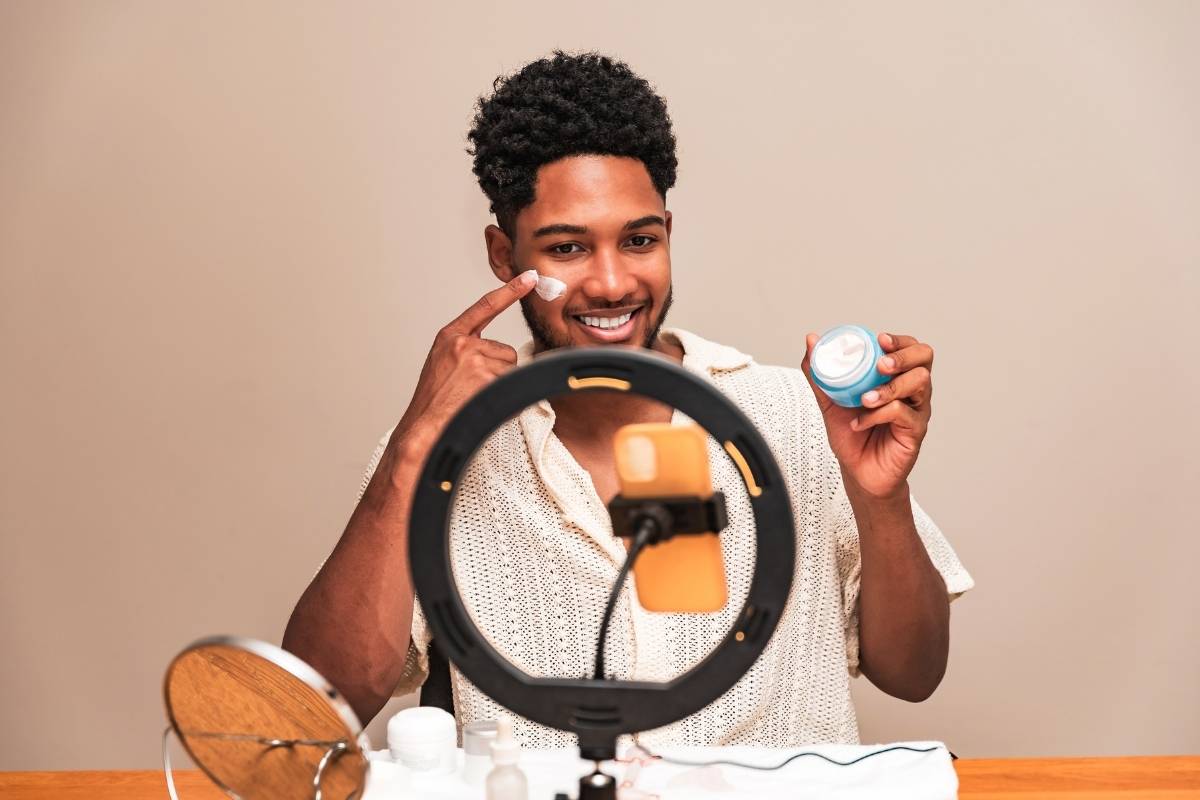
Picture this. Jenna, an e-commerce manager running a skincare brand, finally decides to try AI-generated UGC ads. She types a quick prompt into her tool, hits “Generate,” and gets a batch of videos that feel… generic. Click-through is weak, cost per purchase climbs, and her boss is asking why “AI” is supposed to be saving money.
The problem is not the AI. It is the brief.
When you learn how to brief AI like you would a top-tier creator, you stop burning budget on random experiments and start printing winning creatives that actually move ROAS in the right direction.
In Short:
- AI only performs as well as the brief you give it, especially for UGC-style ads.
- A great UGC brief has five pillars: audience, angle, structure, product proof, and CTAs.
- Tools like ViralBox let you turn tight briefs into dozens of testable variations fast.
- Your goal is not “one perfect ad”, it is a repeatable system for constant creative testing.
UGC Brief Cheat-Sheet: What To Do & What To Avoid
✅ Do This
🧠 Be specific about audience pains, language, and objections.
📌 Give a simple structure: hook, problem, solution, proof, CTA.
🎯 Call out platform, video length, and preferred framing style.
🧪 Request 5 to 10 variations so you can test hooks and angles.
🚫 Avoid This
📉 Vague prompts like “Create a viral ad for my brand”.
🤖 Letting AI speak like a robot instead of a real customer.
🛑 Ignoring claims, compliance, or brand voice boundaries.
♻️ Using the same script for every channel and audience.
Listen up: The quality of your UGC brief is the biggest lever you control before you ever touch budget in Ads Manager.
Why Bad UGC Briefs Kill ROAS (Even When The AI Is Good)
Ad platforms reward relevance, not creativity for creativity’s sake
If you are running paid social in the US right now, you are fighting three things at once: rising CPMs, creative fatigue, and audiences that scroll past anything that smells like an ad. UGC-style videos are winning on TikTok, Reels, and Shorts because they feel native, casual, and honest.
But here is what trips most teams up. They ask AI for “a UGC ad about our product” and expect the tool to magically know:
- Who is actually buying (age, lifestyle, motivation)
- What painful moment triggers the purchase
- What the buyer is comparing you against
- Which words feel natural to the audience and which feel salesy
Without that context, you do not get High-Converting UGC Ads. You get generic video scripts that look fine in a deck but quietly tank in the auction with low CTR and rising CPA.
The hidden cost of “lazy” prompts
Short prompts feel fast, but they cost you on the back end. Here is how weak briefs quietly hurt your numbers:
- Low hook performance, because the opening line could apply to any product in your niche.
- Short watch time, because the story does not match where your customer actually is in the buying journey.
- Wrong expectations, which lead to low conversion rate and refunds because the script over-promised.
- No learning, since you are not testing clear angles or hooks, you have no idea why something worked or failed.
So you keep feeding budget into creative that looks like “UGC” but behaves like a static banner from 2013.
Why this hits e-commerce managers and small teams hardest
Larger brands can throw budget at dozens of creators and agencies. If half the ads flop, they shrug. Smaller US-based e-commerce brands do not have that luxury. Every dollar has to work.
To keep CAC in a good place, you need a system that lets you:
- Turn a single idea into multiple UGC-style variations.
- Launch those pieces fast across TikTok, Meta, and YouTube Shorts.
- Kill losers early and double down on winners.
That is exactly where tools offering AI Avatar Video Generation and Authentic UGC Ad Scripts shine, but only if you know how to brief them properly.
Watch: How Smart Marketers Brief AI For Real Performance
The Perfect UGC Brief Framework For Maximum ROAS
Let’s walk through a practical template you can plug straight into ViralBox or any similar AI tool. The goal is simple: turn your prompts into predictable performance, not random luck.
Pillar 1: Audience Snapshot (Who Is Talking And To Whom?)
AI is great at style, not at guessing your customer’s life. You need to spell that out. Try this structure:
- Target buyer: “US women 25 to 35, busy professionals, struggling with hormonal acne and stress.”
- Context: “Scrolling TikTok at night, looking for real people sharing what actually works, tired of brand-perfect content.”
- Creator persona: “Sounds like a relatable friend, not a polished influencer. Casual, direct, a bit self-deprecating.”
When you are using Virtual Spokespersons, you can also define visual cues like age range, vibe, and energy level so the avatar matches the persona your buyers trust.
Pillar 2: Angle And Promise (Why Should Anyone Care?)
This is where most briefs collapse. “Make it catchy” is not a direction. These are directions:
- Main angle: “I tried everything for my breakouts, nothing worked until I fixed my nighttime routine.”
- Main promise: “Clearer skin in 30 days without harsh treatments.”
- Primary objection to tackle: “I am skeptical of skincare brands and sponsored posts.”
Want to know a secret? Every high-performing UGC ad is just a clear angle wrapped in a human story. Your brief has to lock that angle in before the AI writes a single line.
Pillar 3: Structure And Length (So The AI Does Not Ramble)
Unstructured prompts lead to rambling scripts. Rambling scripts get swiped away. Fix that upfront:
- Platform: TikTok and Instagram Reels.
- Length: 20 to 30 seconds.
- Structure:
- Hook (0 to 3 seconds): pattern interrupt plus relatable problem.
- Problem (3 to 8 seconds): describe the situation and frustration.
- Solution (8 to 15 seconds): introduce product and how it is used.
- Proof (15 to 23 seconds): show results, social proof, or before and after.
- CTA (23 to 30 seconds): direct, simple action with urgency or benefit.
This is where a platform built for Ad Script Generation makes life easier. Instead of asking AI to “figure it out”, you plug your structure into templates that are already optimized for short-form performance.
Pillar 4: Product Facts, Proof, And Boundaries
AI will happily invent features you never built if you do not set guardrails. That is how you get ads that violate policy or confuse customers. Your brief should include:
- Core product facts: ingredients, form factor, price range, who it is for and not for.
- Benefits, not just features: “wakes up with calmer skin” instead of “contains niacinamide”.
- Allowed proof: “Dermatologist-tested and approved”, “Over 2,000 5 star reviews”, but no medical claims you cannot legally back up.
- Hard boundaries: “Do not say ‘cures acne’ or promise overnight results.”
When you upload assets or connect your product feed for a Product Link to Video Ads or a One-Click Product Video, your brief makes sure the AI shows the right packaging, use cases, and visuals that match what customers see on your PDP.
Pillar 5: Voice, Style, And Phrases To Hit Or Avoid
Sounding “off” is one of the fastest ways for UGC content to get ignored. You want the AI to speak like your audience and your best customers, not like a scriptwriter from a corporate spot.
- Voice notes: “Gen Z, casual, light cursing allowed, short sentences.” Or “Millennial parent, warm, practical, no sarcasm.”
- Must-say phrases: Brand name, unique mechanism, key benefit line.
- Never-say phrases: Overused lines like “revolutionary solution” or “in today’s world” that trigger ad fatigue instantly.
Good news. Once you define this once, you can re-use it across all your briefs inside ViralBox so your High-Converting UGC Ads feel consistent even when you are testing dozens of angles.
Turning One Brief Into A Full Test Matrix
Here is where your ROAS really improves. Instead of asking for one “perfect” ad, use that single brief to request:
- 5 hooks for the same angle.
- 3 variations of the proof section.
- 2 different CTAs tailored to different offers.
Then let ViralBox handle A/B Testing Content Hooks and Hook Optimization. You are not guessing which line works, you are running a structured experiment across multiple creative variants.
Scaling What Works With AI Avatars And UGC-style Content
Once you see which scripts are pulling better CTR and lower CPA, you have a simple choice. Either you brief real creators to record their own take on that winning script, or you use AI Avatar Video Generation to quickly spin new variations around the same core message.
Here is the kicker. Because you already nailed the brief, you are not starting from scratch. You are re-combining proven hooks, angles, and CTAs with new looks, accents, and styles so your ads keep feeling fresh without wandering away from what actually sells.
Do not forget distribution
The best creative does nothing sitting in a folder. A good system includes clear notes in the brief about where each variation should run and how it should be adapted.
- Vertical for TikTok and Reels, square for some Facebook placements.
- Different headlines or overlays for direct response on Meta versus discovery on TikTok.
- Shorter cuts for retargeting that skip awareness and get straight to proof plus offer.
Platforms that support Content Distribution at Scale and Multi-Platform Publishing let you push those variations out everywhere without losing track of which script and hook version you are testing.
Unlock Your Conversion Potential. Try ViralBox Today!
Your Move: Turn Prompts Into A Performance System
You do not need more “creative genius” to win with UGC-style ads. You need a disciplined way to brief AI so it behaves like your best human creator on their best day, every day.
If you get the brief right, tools like ViralBox stop being toys and start becoming an actual growth lever. Your team spends less time guessing, your tests become clearer, and your ad account starts telling a simple story about what works and what does not.
So the next time you sit down to generate content, do not just type “Make a TikTok ad for my product”. Pull up this framework, feed the AI a real brief, and give your ROAS a fighting chance. Your future self in Ads Manager will thank you.
Frequently Asked Questions (FAQ)
How long should a UGC brief be when I am using AI?
Usually one to two pages is enough. You want enough detail on audience, angle, structure, and product boundaries so the AI does not guess, but not so much that it turns into a 20 page brand book. Think clear bullet points, not essays.
Can I use the same UGC brief for TikTok, Instagram, and Facebook?
You can use the same core brief for all platforms, but you should add platform specific notes. For example, shorter hooks and more raw energy for TikTok, slightly clearer product framing and CTAs for Facebook and Instagram. The base stays the same, the wrapping changes.
How many variations should I generate from one brief?
A good starting point is 5 to 10 hook variations and 3 full script variations per angle. That gives you enough data for real A/B testing without overwhelming your budget or your ad account structure.
Where does ViralBox fit into my UGC workflow?
ViralBox takes your strong briefs and turns them into ready to test creative at scale. You can generate Authentic UGC Ad Scripts, plug products directly into videos, create content with AI avatars, and publish across platforms from one place. It becomes the creative engine that feeds your paid media.
Should I still work with real UGC creators if I am using AI?
Yes. The most effective approach is often hybrid. Use AI to rapidly test hooks, angles, and structures, then hand the winners to real creators for extra authenticity, or re record them using AI avatars that match your ideal spokesperson. That way you spend human creator budget only on concepts you already know perform.