Table of Contents
2026 Video Marketing Trends: UGC Meets Augmented Reality
Picture this. Jenna, an e‑commerce marketing manager in Austin, is staring at her dashboard at 11:47 pm. Her Meta and TikTok CPMs keep climbing, click-through rates are sliding, and her “top” creators just raised their rates again. She needs new video ads that feel real, convert cold traffic, and do not destroy her margins.
Now toss 2026 into the mix, where customers expect shoppable videos, AR try‑ons, and content that looks like it came from their own friends. User-generated content alone is no longer enough. UGC plus augmented reality is where the real leverage sits, especially if you are using AI to produce and test creative at scale.
In Short:
- UGC is colliding with AR in 2026, turning “reviews” into interactive, shoppable experiences that feel native to TikTok, Instagram, and YouTube Shorts.
- Brands that mix UGC style videos with AR try‑ons and overlays will see higher CTR and lower CAC than static “polished” ads.
- AI tools like ViralBox help you generate High-Converting UGC Ads at volume, test dozens of hooks, and keep ad fatigue from killing your ROAS.
- Small teams can now compete with big budgets by combining AI Avatar videos, AR concepts, and real customer-style storytelling.
UGC + AR Video Ads in 2026: Fast Dos & Don’ts
✅ Do This
- ✅ Use short, punchy hooks that show the product result in under 3 seconds.
- ✅ Mix real UGC style framing with subtle AR overlays like price tags, ratings, or “Add to Cart” cues.
- ✅ Run A/B Testing Content Hooks to find the best AR effect plus script combo.
- ✅ Let AI Avatars demo features while AR highlights key benefits on screen.
🚫 Avoid This
- 🚫 Overcomplicating AR so the viewer cannot tell what to do next.
- 🚫 Long intros that hide the product or do not show the transformation.
- 🚫 Using AR only as a “cool toy” instead of tying it to a clear call to action.
- 🚫 Ignoring comments and social proof when scripting your UGC ads.
📈 Big Wins
- 🛡️ Personalized AR try‑ons that mimic in‑store testing.
- 📉 Lower CPA from authentic, “shot on phone” style videos with smart effects.
- ✅ Faster iteration using AI Avatar Video Generation plus UGC scripts.
- 🚀 Smarter scaling with Content Distribution at Scale across TikTok, Meta, and YouTube.
Why UGC Meets AR Is The 2026 Performance Battleground
Ad fatigue is real, and your customers are numb
US users scroll hundreds of videos a day. Your ad has maybe 1 second to earn attention. Perfect studio footage often screams “ad” and gets swiped instantly. UGC style content still wins because it feels like a friend talking, not a brand lecturing.
But here is the twist for 2026. Plain selfie videos are starting to blend together too. Everyone is using the same talking-head format, the same “I just found this product” hook, the same templates. So performance metrics are sliding:
- CTR drops as viewers recognize ad patterns and tune out.
- CPMs rise, especially on Meta and TikTok, as auctions get more competitive.
- Creators increase their rates, hurting smaller margins and testing velocity.
UGC is still the foundation, but it needs a new layer of “wow” that is not cheesy or overproduced. That is where AR comes in.
What “UGC + AR” really means in practice
Forget sci‑fi holograms. Think simple, performance-focused experiences that feel native to short‑form video. For example:
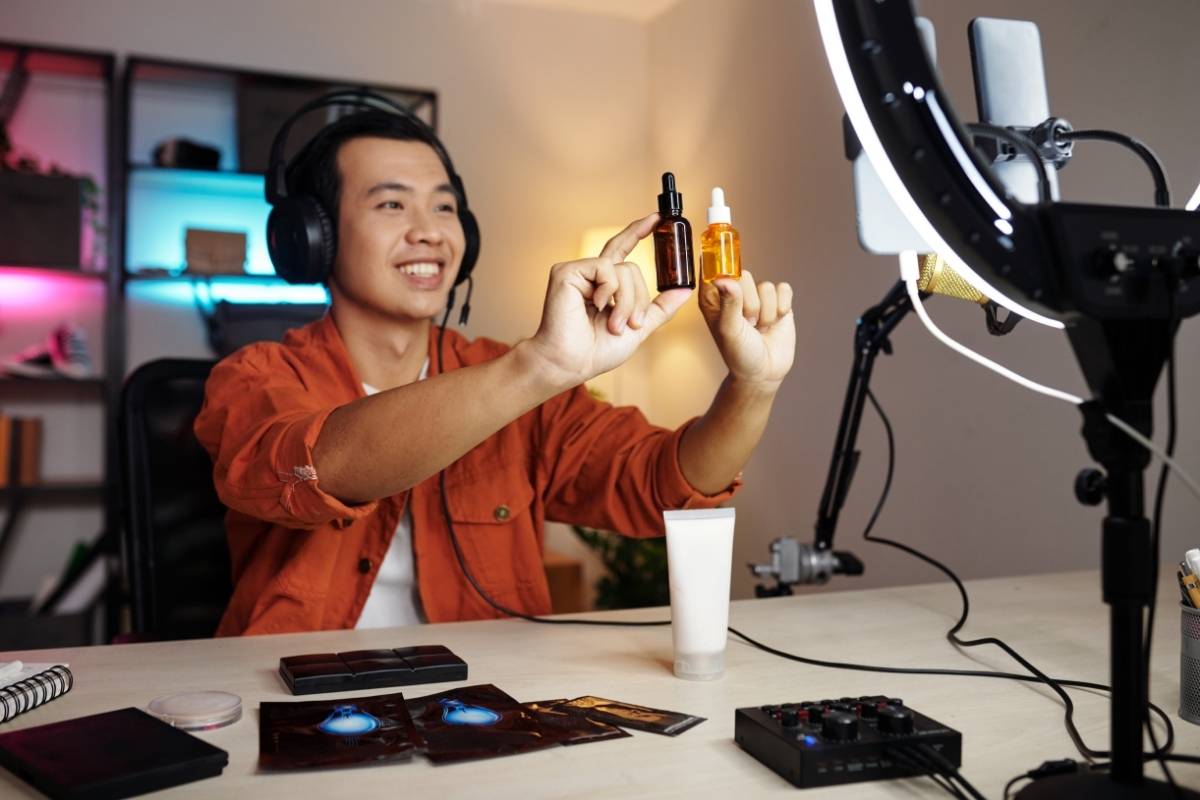
- A UGC creator shows your skincare serum. As they move the bottle near their face, AR highlights fade lines and shows “7 days later” results in a quick overlay.
- A sneaker brand uses a TikTok-style try‑on effect so viewers can see the shoes on their own feet while watching real customers react.
- A kitchen gadget ad uses AR arrows and quick pop‑up text to spotlight features while the “reviewer” talks, kind of like annotations in real time.
The viewer still feels like they are watching a believable person, but AR quietly does the heavy lifting: focusing attention, highlighting benefits, and making the product feel interactive.
Why this combo works for performance marketers
Listen up: platforms reward content that keeps users engaged. UGC, when done right, feels like regular content, so it gets better watch time and cheaper impressions. When you add smart AR, three good things usually happen:
- Higher CTR: AR effects draw the eye, call out your CTA, and make the product clearer, faster.
- Lower CPA: Better-qualified clicks from people who have already “seen” the product in context or tried it virtually.
- More trust: UGC sells the story, AR sells the proof and usability.
The problem is, traditional production pipelines are not built for this. Coordinating creators, script variations, AR effects, and multiple platforms is slow and expensive. That is why brands that rely only on manual processes are capped on how fast they can test and scale.
The scaling nightmare: creators, costs, and coordination
If you have tried scaling UGC, this probably sounds familiar:
- You pay 10 or 20 creators, get wildly inconsistent content, and only 1 or 2 ads hit.
- You cannot easily “copy-paste” what worked into new angles because creators have different styles, lighting, and delivery.
- You want to test AR overlays or interactive effects, but your dev or agency pipeline moves at the speed of molasses.
By the time you get content back, the “trend” sound or style is already old. The US market moves fast, and if you are not launching new hooks weekly, your CAC climbs.
So the real 2026 challenge is not just “making AR UGC content”. It is building a repeatable system that lets you create, test, and scale UGC-style and AI‑driven videos with AR baked in, without burning your budget or your team.
How To Actually Win With UGC + AR In 2026 (Using ViralBox Smartly)
1. Build a repeatable UGC/AR ad system, not random one‑offs
Want to know a secret? The brands that will dominate 2026 are not the ones with the flashiest effects. They are the ones with a boringly reliable pipeline for creative testing.
Here is a simple structure you can use and adapt inside ViralBox:
- Stage 1: Hook experimentation
Use A/B Testing Content Hooks to launch 10 to 20 quick front‑end variations: benefit-first, problem-first, curiosity, price anchor, before/after. Keep format UGC‑style but overlay subtle AR elements like timers, ratings, or quick product callouts. - Stage 2: Script and angle refinement
Once a few hooks win, expand those into longer, structured narratives using Authentic UGC Ad Scripts. Pull language directly from customer reviews, support tickets, and social comments so the copy sounds real, not brand-written. - Stage 3: AR focus testing
Take your winners and add or adjust AR “assistants”. Example: one version uses an AR price slash, another uses a “Try it on” prompt, another uses social proof counters like “4,327 sold this week”. Let the data tell you what actually moves the needle.
2. Use AI Avatars to prototype UGC concepts before involving creators
Hiring creators to test every new angle is expensive and slow. That is where AI Avatar Video Generation comes in.
You can spin up Virtual Spokespersons that look and sound like real people to rapidly test:
- New hooks for cold traffic
- Different demographics or “roles” (busy mom, gym bro, minimalist, budget hacker)
- AR overlays that might feel awkward or cluttered, before you pay a single human creator
Once the data shows a winning combo, then you bring in real creators to “re‑skin” those concepts so you get the emotional depth of human UGC with the proven framework of AI‑tested scripts and effects.
3. Connect products directly to creative with one‑click flows
A big bottleneck is always: “How do we get accurate product shots and info into every new video?” ViralBox helps with that too.
Using a Product Link to Video Ads workflow, you can plug in your Shopify or product URL and spin up a One-Click Product Video concept that auto-pulls images, benefits, and key details. From there, you or your team can layer on:
- UGC-style testimonial voiceovers
- AR callouts of the top 3 benefits right on the product
- Side‑by‑side comparison overlays (old vs new, drugstore vs premium, etc.)
This closes the gap between “we added a product” and “we have a testable video ad” so you can keep up with inventory changes, bundles, and seasonal drops.
4. Publish everywhere without burning out your team
Once you have your winners, you want them everywhere fast. That is where Content Distribution at Scale and Multi-Platform Publishing make life easier.
Here is how a smart marketer uses it:
- Cut verticals for TikTok, Reels, Shorts, and Story placements with platform‑specific CTAs.
- Keep the core UGC + AR structure the same, but tweak captions, overlays, and end screens by platform.
- Bundle creative variants into “testing waves” that all launch the same week, so you do not play whack‑a‑mole across tools.
The result is a machine that spits out High-Converting UGC Ads that look native to each feed, stay fresh, and scale without creative burnout.
5. Practical UGC + AR ideas you can steal right now
- Beauty & skincare
“Get ready with me” UGC where AR highlights ingredients and auto-labels before/after shots with short captions like “Day 1”, “Day 7”, “Day 30”. - Fashion & accessories
AR try‑ons for glasses, hats, jewelry, or shoes while a creator explains sizing and comfort. Add AR arrows to show hidden details like stitching or clasp strength. - Home & kitchen
UGC style demos with AR measurements or pop‑up “fits in most cabinets” notes. Great for bulky or storage‑sensitive products. - Fitness & wellness
Creator explains their routine while AR overlays track reps, calories, or “weeks in program” for credibility and commitment.
You can model each of these using AI Avatars inside ViralBox first, then roll them out with real customers or influencers once you see the performance lift.
Unlock Your Conversion Potential. Try ViralBox Today!
Your Move: Turn Scroll-Stoppers Into Buyers
If you are running ads in the US right now, you already feel where this is heading. Plain UGC is getting crowded, polished studio content feels out of touch, and you cannot afford to guess which new trend is worth chasing.
UGC plus AR gives you a path forward that is both creative and measurable. Let real‑feeling content tell the story, let AR handle clarity and interactivity, and let AI tools like ViralBox give you the volume and speed to stay ahead of ad fatigue.
You do not need a Hollywood budget, you just need a simple system and the will to test. Start small, launch a few UGC + AR concepts, watch what your metrics say, and build from there. Your future customers are already scrolling. The question is whether they see another forgettable ad, or a video that finally feels made for them.
Frequently Asked Questions (FAQ)
How is UGC with AR different from regular UGC ads?
Regular UGC ads rely on a person talking to the camera and social-proof style storytelling. UGC with AR keeps that authentic feel but adds visual layers such as try‑on effects, benefit callouts, ratings, and interactive prompts. Those AR elements make the product easier to understand in seconds, which usually lifts watch time, CTR, and conversions.
Do I need a big budget to start using AR in my ads?
No. Most platforms now offer built-in AR tools and filters, and you can prototype concepts using AI Avatars inside ViralBox before paying creators. The smartest move is to start with a few simple effects that highlight benefits or usability instead of custom, high-cost AR builds.
Will UGC and AR work for B2B or only for consumer brands?
UGC and AR are strongest for consumer products, but B2B brands can still benefit. Think of AR as a way to visualize dashboards, workflows, or ROI instead of physical try‑ons, and UGC as customer videos or expert explainers. The key is to match the format to the buying journey and decision makers, not blindly copy DTC playbooks.
How many UGC + AR creatives should I test each month?
For most small to mid‑size brands, starting with 10 to 20 new variations per month is realistic. As you build a library of proven hooks and scripts in ViralBox, you can ramp up and test more angles without a massive increase in workload. The goal is to always have fresh creatives cycling in before your winners burn out.
Can AI Avatars really perform as well as human creators?
AI Avatars are best used for speed and testing. They help you quickly test hooks, scripts, and AR combinations before investing in human talent. Often, the top-performing structures you find with AI can then be re‑shot with real creators for maximum emotional impact while keeping the proven messaging.
How do I know if my AR elements are helping or hurting performance?
Treat AR as a test variable, not a default setting. Run A/B tests where the only difference between creatives is the AR element or its placement. Watch for changes in hook retention, CTR, and CPA. If a flashy effect hurts clarity or distracts from the offer, remove or simplify it.
Which platforms are best for UGC + AR in 2026?
TikTok, Instagram Reels, and YouTube Shorts will remain the strongest playgrounds for UGC + AR because they already train users to expect filters and effects. That said, Meta feed and Stories can also perform well when you keep the content native and mobile-first. The key is to design vertical video first and then adapt for each platform with ViralBox’s multi-platform approach.