Table of Contents
10 Visual Cues That Boost Trust in 1.5 Seconds: A Guide for UGC Creators
Jamie, an e-commerce marketing manager in Austin, loads a new UGC ad into Meta Ads Manager at 10 a.m. By 2 p.m., results are ugly. High CPMs, people scroll right past, and the comments are full of “Is this legit?” She used a real creator, a solid offer, even a discount code, yet the ad “feels” off to viewers in the first second and a half.
If that sounds familiar, you are not alone. US shoppers have been burned by sketchy dropship ads, AI spam, and low-effort “reviews”, so their trust radar is on high alert. You have about 1.5 seconds to look real, competent, and safe, or your potential customer is gone.
This guide breaks down 10 visual cues you can build into every UGC or AI-generated video to earn trust at a glance, while still keeping your content fast, scrappy, and scalable with tools like ViralBox.
Key Takeaways:
- Viewers decide if they trust you in the first 1 to 2 seconds, mostly from visual signals, not words.
- Small cues like eye contact, lighting, framing, and on-screen proof can dramatically improve CTR and watch time.
- You can bake these cues into both human UGC and AI Avatar Video Generation for repeatable results.
- Systematizing these 10 cues inside your ad templates makes every new creative more “believable” by default.

UGC Trust Boosters vs Trust Killers (Visual Only)
✅ Trust Boosters
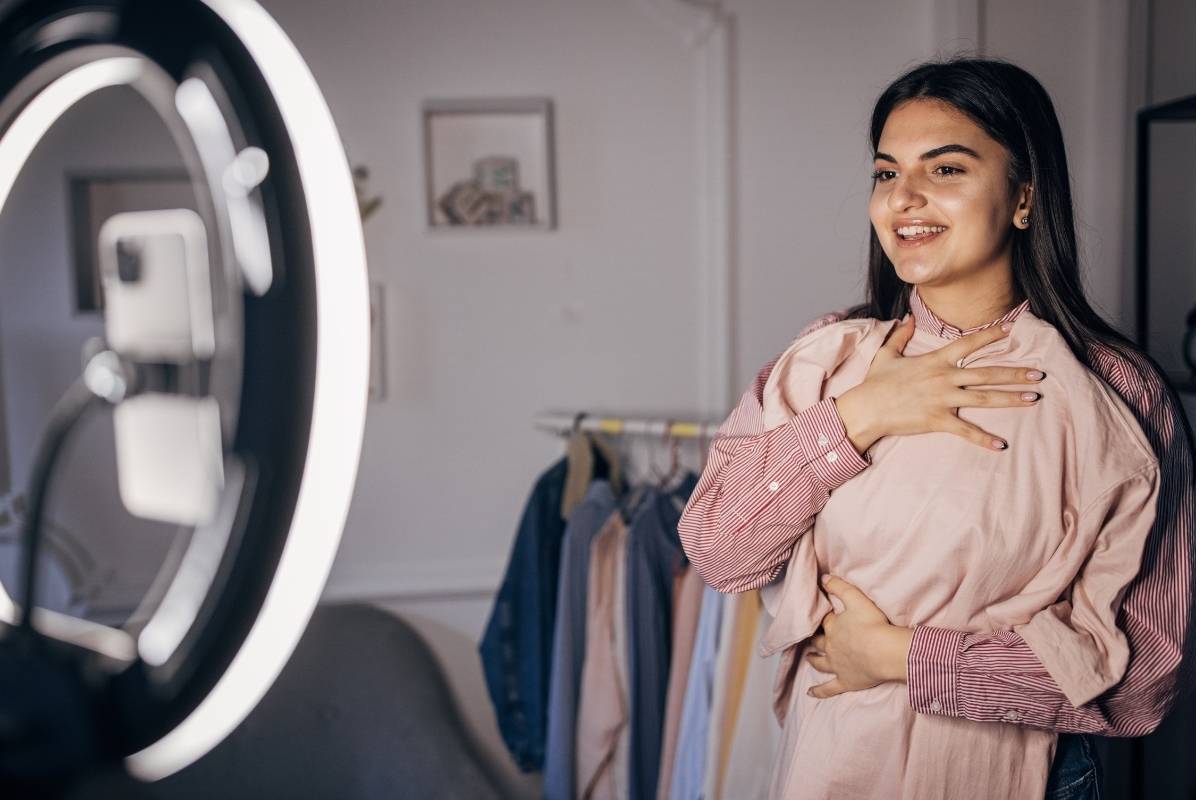
- 🛡️ Clear eye contact with the camera in first 1.5 seconds
- ✅ Natural lighting and realistic background (home, office, car)
- 📦 Real product in hand or visible in frame
- 📈 On-screen social proof (stars, reviews, “3,247 sold”)
- 🎯 Clean framing, no clutter, brand logo tastefully visible
🚫 Trust Killers
- 📉 Overly polished studio look that feels like a stock ad
- 🚫 Distracting filters or heavy retouching on face
- ❓ No product shown, only talking head “claims”
- 💸 Spammy overlays like “BUY NOW!!!” everywhere
- 😶 Flat facial expression, deadpan delivery, no emotion
Listen up: Viewers judge these cues before they even process your script. Bake them into every UGC or AI video template you run.
Why Those First 1.5 Seconds Decide Your CPA
Think about how you scroll TikTok, Reels, or Shorts. Your thumb is moving before you are consciously “deciding” anything. Your brain is scanning for three things fast: Is this relevant to me, does it look legit, and is this worth my time?
If your video fails any of those in under 2 seconds, your CTR, watch time, and conversions are going to suffer. No discount code will save you.
The Silent Metrics Behind Trust
When a UGC ad looks sketchy or generic, you will see it in your metrics right away:
- Low hook retention Viewers bail before 3 seconds because the video “feels” like another random ad.
- High CPMs Platforms learn that people skip your videos, so you pay more to reach each user.
- High CPA Few people click, fewer people buy, so your cost per purchase climbs.
- Comment toxicity More “Is this a scam?” than “Where do I buy?” means your visual trust cues are off.
The wild part is that most of this happens before your script even gets going. That is why creators who understand little visual cues, not giant production budgets, often win.
What Makes Viewers Trust a Face on Their Screen
US consumers have seen every scam format at this point. Random selfie in a car, AI voiceover on stock footage, fake review with no real product, you name it. To them, anything that looks slightly “off” gets tossed into the same bucket.
What earns trust instead:
- Consistency The person, background, and product feel like one real story.
- Effort You do not need a studio, but light, framing, and clarity show you care.
- Proof On-screen receipts, usage shots, packaging, or quick “before and after” visuals.
Good news, you can engineer all of that on purpose, and you can make it repeatable across dozens of High-Converting UGC Ads.
The 10 Visual Cues That Boost Trust In 1.5 Seconds
1. Direct Eye Contact With the Lens
Trust cue number one: the viewer feels like the creator is talking to them, not to a vague crowd or a script off-screen.
How to use it:
- Position the camera at eye level, not below the chin or up the nose.
- Tell creators, “Look into the small black circle, not your own face on-screen.”
- For Virtual Spokespersons, select templates where the avatar’s gaze points slightly forward, not off to the side.
That micro shift in eye line is often the difference between “salesy” and “hey, let me show you what I found.”
2. Natural Lighting That Feels Real, Not Filtered
Lighting is one of the fastest subconscious tells of authenticity. Harsh neon, super orange tungsten, or grainy low light screams low effort or fake vibe. Natural-ish light says “real person, real life.”
How to use it:
- Shoot near a window with soft light on the face, not behind the subject.
- Avoid heavy beauty filters. Light skin smoothing is fine, but do not blur reality.
- Check the first 2 seconds on a phone screen at 50 percent brightness. If it looks muddy, your viewer will bounce.
3. Clear Product Presence in Frame
Want to know a secret? Most viewers will not even hear the first sentence if they do not see a product or benefit immediately.
How to use it:
- Start with the product already in the creator’s hand, on their face, or on their desk.
- Use fast cut scenes product close-up in the first 1.5 seconds, then cut to the face.
- With Product Link to Video Ads, feed your product asset directly so the AI avatar can “hold” or showcase it in-frame immediately.
If someone cannot tell what category you are in at a glance, you are burning ad dollars.
4. Realistic Backgrounds, Not Floating Nowhere
White void backgrounds, generic gradient backdrops, or obvious green screens distance the viewer from the story. Real spaces build rapport, even if they are simple.
How to use it:
- Have creators film in actual kitchens, bedrooms, cars, or gyms that match your product use.
- Keep clutter under control, but leave normal life cues. A mug, a laptop, a plant.
- For AI content, pick avatar scenes that look like a real office, living room, or creator setup.
5. Clean Framing With the “Rule of Thirds”
Viewers instantly judge competence based on how well the shot is framed. You do not need film school, you just need consistency.
How to use it:
- Keep the eyes roughly along the top third of the frame, not dead center or at the bottom.
- Leave space above the head, but not so much that the face feels tiny.
- Make sure nothing awkward cuts through the head or neck, like door frames or lamp posts.
Good framing makes your ad “watchable” without viewers even knowing why.
6. On-Screen Text That Matches What They See
Text overlays are one of the fastest trust-builders or trust-killers. If your text is screaming “BEST PRODUCT EVER!!!” while the visuals show nothing, people click away.
How to use it:
- Use short, benefit-focused captions like “I stopped tossing and turning at 3 a.m.” while the creator holds your sleep product.
- Sync text to key visual moments, like “Day 7 results” over a quick before and after clip.
- In your templates, lock in positions for first-line copy so it never covers the creator’s mouth or eyes.
7. Tiny Bits of Visual Social Proof
Listen up: US shoppers look for fast proof that other people already took the risk. You can show that proof visually without a long explanation.
How to use it:
- Add a small “4.7 ★ (2,381 reviews)” overlay in the first 2 to 3 seconds.
- Flash a quick screenshot of a real 5-star review, then cut back to the creator.
- Use a subtle “Trusted by nurses / dog parents / runners” badge near the bottom corner.
Paired with Ad Script Generation, you can build scripts that reference the exact review you are displaying, which doubles the impact.
8. Micro-Expressions That Match Your Promise
People do not trust a flat, bored face saying “This changed my life.” The emotion needs to fit the story quickly.
How to use it:
- Prompt creators with real moments. For example, “Show your ‘oh wow, this actually worked’ face” instead of “look happy.”
- For AI avatars, choose emotion presets, like slightly surprised, confident, or relieved, instead of neutral robot face.
- Review the first 2 seconds frame by frame, and cut any awkward blinks or dead air before the expression lands.
9. Simple Visual Structure, Not Chaos
A cluttered screen feels like work. Too many emojis, discount stickers, or arrows make people feel manipulated, especially in the US where ad fatigue is intense.
How to use it:
- Limit yourself to 1 main visual focus at a time face, product, or text.
- Use a simple color palette that matches your brand, not every color on the keyboard.
- Make sure key UI elements like the “Shop Now” button are not covered by your overlays.
10. Visual Continuity Across Your Ads
Trust does not just come from one ad, it comes from patterns. If every video looks totally different, people will not recognize your brand, even when your offer is strong.
How to use it:
- Use repeatable templates for framing, fonts, and intro style so viewers start to recognize you fast.
- Keep your logo small but present in a consistent corner.
- Use A/B Testing Content Hooks to test different first lines without changing your entire visual identity.
Over time, this turns “random UGC” into an actual content system that people trust and remember.
Turning Visual Cues Into a Scalable UGC System
Here is the real challenge. You can teach one creator to nail these cues, but how do you repeat it across 50, 100, or 300 creatives without losing your mind or your budget?
Step 1: Turn These Cues Into a One-Page Brief
Before you hit record or generate anything with AI, write a tiny checklist for your team or creators:
- Eye contact in first 1.5 seconds
- Product clearly visible from second one
- Natural lighting, no heavy filters
- Readable text overlay with one main benefit
- One visual proof element review, badge, or packaging
Send this with every creative request. Over time, it becomes muscle memory for you and your partners.
Step 2: Template Your Best-Performing Visual Hooks
Once you find a visual pattern that works, do not reinvent the wheel. Turn it into a template.
For example:
- Clip 1 (0 to 1.5 seconds) Creator looks at camera, holds product up, text says “If you have back pain, watch this.”
- Clip 2 (1.5 to 4 seconds) Cut to close-up of product on body, quick motion, on-screen rating “4.8 ★ from 3,247 customers”.
- Clip 3 (4 to 8 seconds) Creator shows quick mini-demo, a simple step, or visible before and after.
With tools like ViralBox, you can plug this structure into One-Click Product Video templates and let either real creators or AI avatars follow the exact same flow.
Step 3: Use AI Avatars as Your “Always-On” Test Bench
Creator schedules, rates, and re-shoots slow you down. When you want to see which
Some smart tests to run:
- Same script, different backgrounds home office vs bedroom vs kitchen vs studio.
- Same hook text, different eye contact and framing.
- Same product demo, different versions of on-screen review proof.
Pair this with Hook Optimization to identify the top performing visual + copy combo for the first 3 seconds. Once you see a winner, you can brief human creators to match that winning structure.
Step 4: Distribute Like a Media Company, Not a Random Brand
Solid visuals only matter if people actually see enough of your ads. That means getting your best creatives onto every relevant platform fast.
With Content Distribution at Scale and Multi-Platform Publishing workflows, you can:
- Resize and repurpose the same trust-optimized template for TikTok, Reels, Shorts, and Stories.
- Label creatives by hook type and visual style so you can quickly double-down on themes that work.
- Keep a constant rotation of fresh videos so ad fatigue does not kill your best ideas.
Instead of hoping one UGC video saves the quarter, you are running a reliable creative machine that keeps feeding your campaigns.
Unlock Your Conversion Potential. Try ViralBox Today!
Your Move: Make Every Frame Earn Trust
If you are running US traffic, your audience has seen a thousand fake “testimonials” and AI spam clips already. They are not giving you the benefit of the doubt. Your job is to look trustworthy before they even think about it.
The fastest way to do that is to stop guessing. Lock in these 10 visual cues, build them into your briefs and templates, then use ViralBox to test variations at scale until your metrics prove you are on the right track.
Whether you are a one-person shop or running a full performance team, you deserve ads that actually pay you back. Start fixing the first 1.5 seconds, and your CTR, ROAS, and sanity will follow.
Frequently Asked Questions (FAQ)
How do you get users to create UGC?
Start by asking directly, but do it with respect and clarity. Always request permission before using a customer’s content, then credit the original creator wherever you post it. Be specific about what you want “Unboxing video with your first reaction” or “Show how you use our product in your morning routine” so people are not guessing. Finally, make sure every UGC request supports your broader social strategy and marketing goals, not just random one-off posts.
How do you create a UGC campaign?
Begin with a clear theme and a simple prompt, then give people an easy way to participate. Use a branded hashtag on platforms like Instagram or TikTok so you can track submissions. Repurpose the best UGC across multiple channels paid ads, email, website, and not just social feeds. You can also encourage customers to post unboxing videos that highlight your packaging and first impressions, or host a small event or virtual challenge that brings customers and creators together to share content around your brand.